 ×
×

AusISA prepares the next generation of ASD-endorsed IRAP assessors through hands-on, scenario-based training — delivered by active practitioners from Redacted Information Security and Malware Security.
View upcoming courses Learn about AusISA →AusISA is bringing a walless data centre to BSides Canberra. Inside it, an AI orchestrator called SCLU has hardened the Commonwealth's Sovereign Secure Operating Environment until it reached the only conclusion left to it — users are the last remaining attack surface.
Bring a team of five to eight. One of you wears the goggles and is the only person who can see the Grid; everyone else is the hands. Fifteen minutes, one window, no second run. Five open Fragments challenges are scattered across the conference for everyone else — no booking required.
The Australian Information Security Academy is a standalone training entity formed by Redacted Information Security and Malware Security — two of Australia's most established sovereign cyber firms. As an ASD-endorsed IRAP training provider, AusISA delivers the hands-on, scenario-based IRAP training course that prepares cyber security professionals for endorsement as IRAP assessors.
Our flagship IRAP Assessor Training course is a scenario-based, hands-on program aligned to ASD's IRAP Common Assessment Framework. Participants assess a simulated government environment, gather evidence, and produce an IRAP-style assessment report — building the skills required for ASD endorsement as an IRAP assessor.
Understand the IRAP Policy and Procedures, the Common Assessment Framework, quality assurance standards, and the assessor's obligations under the ISM and PSPF.
Interpret architecture diagrams, define system and assessment boundaries, consider the attack surface, and understand how scoping drives assessment depth and focus.
Hands-on assessment of ISM controls within a simulated government environment. Gather evidence, determine control effectiveness, and apply ASD's assessment framework.
Navigate conflict of interest declarations, assessment integrity requirements, and the governance obligations that underpin every IRAP engagement.
Produce an extract of an IRAP-style assessment report based on your testing — documenting findings, justifying control outcomes, and providing descriptive recommendations.
Formal knowledge assessment covering control interpretation, technical knowledge, analytical reasoning, IRAP requirements, and assessment methodology.
Training is delivered exclusively by active practitioners — ASD-endorsed IRAP assessors and experienced operators with deep experience across Defence, Intelligence and Critical Infrastructure.

Head Instructor of AusISA and Director at Redacted Information Security. Over a decade of experience across Federal Government, law enforcement and the military. IRAP Assessor, GIAC Certified Security Leader, ISO 27001 Lead Auditor, and currently completing a Master of Cyber Security (Advanced Tradecraft) at UNSW Canberra. Commanded the first Army Cyber Protection Team.

Director of Malware Security with nearly 20 years in government security. Technical foundation spanning penetration testing, red teaming, digital forensics, incident response, and malware analysis. Delivers IRAP assessments and GRC advisory services, with deep expertise in the ISM, Essential Eight and PSPF. Holds a Master of Cyber Security from UNSW Canberra.

Over 15 years in information security across government and industry. IRAP Assessor, CISSP, CISA, OSCP and Graduate of the Australian Institute of Company Directors. Retired Royal Australian Corps of Signals officer with operational deployment experience. Managing Director of Bespoke Security, specialising in IRAP and entity assessments for federal government clients.

ASD-endorsed IRAP assessor with over a decade of experience across defence, intelligence and critical infrastructure. Currently Cyber Security Discipline Manager at a major Australian Defence prime contractor, with deep expertise in the ISM, PSPF and DSPF. Holds CISM, CRISC, and ISO 27001 Lead Auditor certifications.
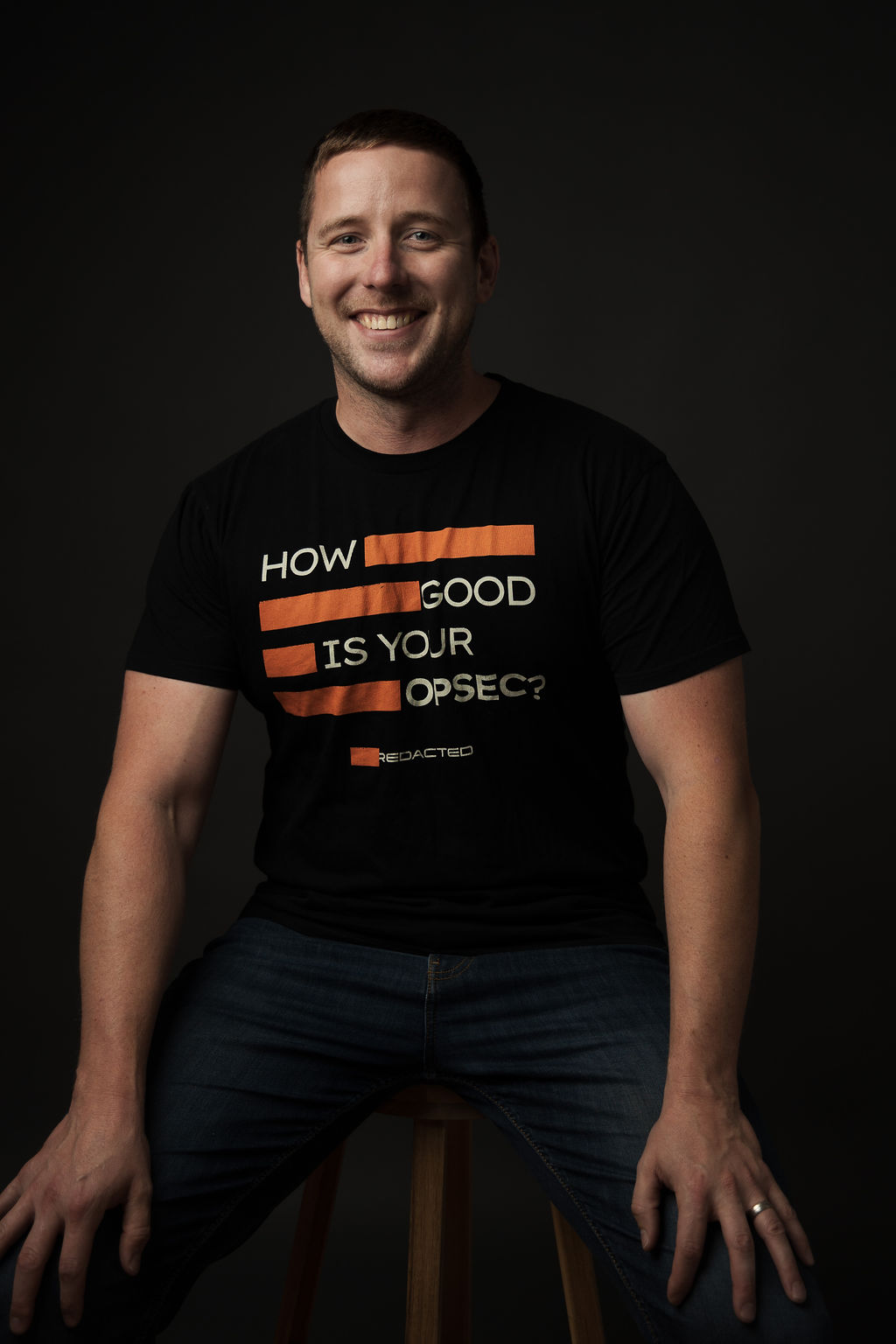
Red team expert with experience across national intelligence, military and law enforcement. IRAP Assessor, OSCP, eCPPT, GIAC Certified Security Leader and Systems Auditor. Master of Cyber Security (Advanced Tradecraft) with Excellence from UNSW. Former NSW Police officer of over a decade, serving in counter-terrorism, investigations and digital forensics. Instructs at the Defence Space and Cyber College.

Over 15 years of experience across defence, security consulting and financial services in Australia and Europe. ASD-endorsed IRAP assessor holding OSCP, GPEN, GXPN, GREM, CISSP and CRISC. Degrees in Aerospace Engineering and Computer Science with a Masters in Software Engineering from the University of Adelaide. Currently a cyber security consultant in the critical infrastructure sector.

Over 30 years in cyber security across intelligence, military and commercial sectors. Specialises in offensive tactics and defensive architectures, bringing dual mastery of red-teaming and adversarial simulation alongside hardened defensive design — translating real-world attacker perspective into rigorous assessment methodology.